Sunday, March 17, 2013

Apps in the Classroom

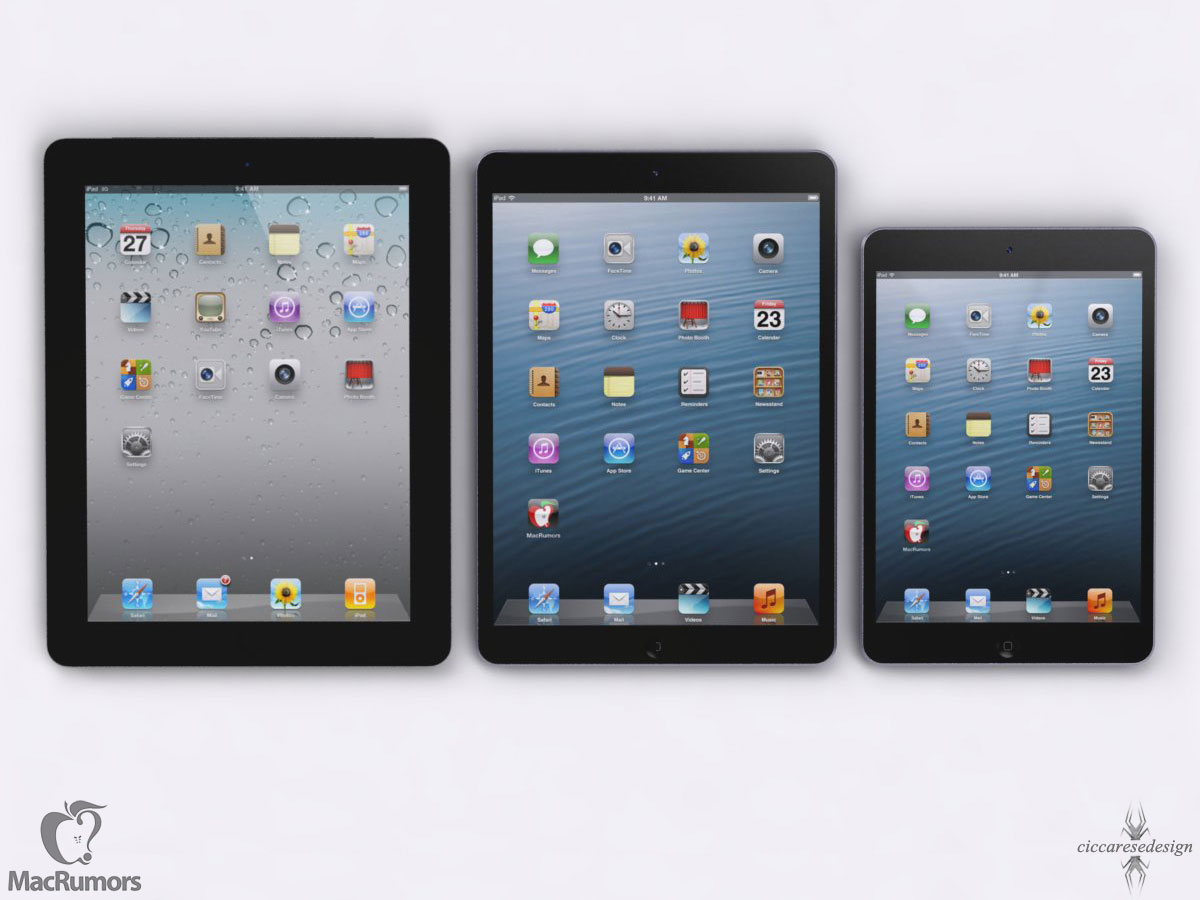
image from macrumors.com
Because of the many new varieties of smart phones and tablets, there now exists a variety of different apps that are cheap, and can be used in the classroom.  Here are five that I think would be useful in a classroom.
  1. One such app is the MathBoard for the iPhone, iPod touch, or iPad.  This app generates random number equations for a variety of levels of math.  It can be used like a quiz app, to test the students knowledge and understanding of the topics recently covered.
  2. Another app that could be used for a variety of different subjects is Edmodo.  This is similar to the different websites that schools use to keep kids connected such as Moodle or Blackboard.  It is useful in helping students stay aware of things due, and even allows them to post assignments.  This is probably best for high school aged students.
  3. There is also Motion Math, which is a game that requires a knowledge of fractions.  This will help students become used to fractions, negative decimals, and practice with their improper fractions.  It is also a game that could draw students in, and help them learn in a fun way.
  4. Mathmagics is an app that is useful for older children and adults who want to go beyond basic mathematics and arithmetic.  It has several ways to perform different mental math tricks.
  5. For younger students, there are a variety of games that have somewhat of a story mode.  One of those is Math Ninja.  This allows the students to learn math while protecting their "treasure" from a bad guy.  You can even focus the game on specific areas you think your student needs to work on while they play.
Though these apps can be useful, and there are many others just as good, we need to be careful to not become obsessed with them.  In 1 Corinthians 6:12, Paul is talking about how all things are "lawful" for him, but not all things are helpful to him.  We should not waste our time, or neglect other things that are responsibility just because we think we have an excuse because a certain game is educational.  While education is a worthy cause to play a game, life's responsibilities still need to come first.  We need to honor God in everything we do, and obsessing over a certain game does not bring Him glory or honor.  So using apps can be useful, just be careful to not overuse them.

Thursday, March 14, 2013

Copyright and Fair Use


image from howto.gov

Copyright.  What a fun topic.  I didn't realize how complicated it was until I learned about it in my technology class.  I used to think it was just make sure that you don't download anything illegally, and make sure to cite all your sources.  But oh man, is it so much more.
Not only should you be careful to cite everything, but there are certain things that you can use for educational purposes, and certain things you have to ask for permission, or you are being illegal.   The problem I am having is figuring out which is ok to use for educational purposes, and what I have to ask for permission.  Some things are clear, for example, if I find an article that I want to use, I could pass it out to my class one time, and that is fine.  Also, it seems pretty simple to me that if I am doing something that is hindering someone from receiving money they should be receiving, then that is a big no no.  Other things do not seem so black and white to me. 
What is so important about making sure you give other people the credit they deserve, anyway?  Isn't citing them enough, do we really need permission for every single picture and video we as teachers want to post on a website? 
Well, for one thing, it is the law.  And we should respect that, and try to follow it as best we can.  These copyright laws are created in order to protect people's unique ideas and thoughts.  Also, it is respectful towards others.  In the Bible, in Philippians 2:3, it says that we should consider others better than ourselves.  We need to think of others before us.  So maybe we should change our mindset when it comes to thinking about copyright laws.  Maybe we shouldn't be thinking about how annoying it is that we have to look up all these things and ask everyone and their brother for permission to use a certain picture, but should think about how they would feel if we didn't ask.  Sometimes simply recognizing that it is another person's idea, and giving them credit is more of a way to show you noticed, and appreciated their work.

Wednesday, February 27, 2013

Podcasting in the Classroom

Image from mashable.com
     Math is a difficult subject to teach.  It is also a difficult subject for students to get interested in, since most of the time, they hate it.  Especially by the time they get to high school.  I always thought that it is a better idea to show students how a problem is done, to walk them through the process, than it is to stand up and try to lecture them about a topic.  This is one reason why I never truly considered using a podcast for my future math students.
     However, there are several ways it is possible to use a podcast.  It is a series, and students can subscribe so they automatically receive any new posts that you put online.  This is always a plus.  Maybe if they receive it automatically, they are more likely to look into, than if I tell them to look it up.
     What about for those students who are falling behind or struggling?  How can podcasts help them?  Even as a math teacher, it is possible to find different ways to present a concept.  So as a math teacher, maybe for students struggling you can post a podcast series that will help them to better grasp a certain topic, or even explain a concept in a different way, from a different perspective.
    Then there are students who on average, understand what is going on in the classroom.  They do their homework with some trouble, but are making average grades.  How can a podcast series help them?  Maybe, the reason they are making average grades, is because math is not an interesting subject for them.  Finding a way to make it more interesting may help to boost their motivation.  A podcast series that helps students to dig deeper into a concept in math, or even to see how it applies to their lives, would be one way to accomplish this.
    Lastly, how can we reach those students who are acing their math class?  One way to do this is by presenting a podcast series that will challenge them.  Or maybe just one that will help them to become more interested in math.  Again, seeing how it applies to their lives outside of school.   Even for the smart kids, we need to strive to make math an interesting topic, in the hopes that they will retain their math knowledge, and maybe even study it later.
     Titus 2:7-8 says, "In everything, set them an example by doing what is good.  In your teaching show integrity, seriousness, and soundness of speech that cannot be condemned, so that those who oppose you may be ashamed because they have nothing bad to say about us."  (NIV version)  As teachers, it is important to set good examples for our students.  This includes the use of technology in our classroom.  What we do with technology in our classroom, and what we say about it will stick in the students mind.  We want them to use technology as a tool, but not to abuse it.  Using it with integrity is another thing we should focus on.  Again, our classroom example will stick with them.  The kinds of rules we make should encourage them to cite their sources, to stay on sights that are clean, and to be careful with how much time they spend using technology.  Even though we cannot always say how they use technology at home, we can set a good example for them in the classroom.

Wednesday, February 20, 2013

Internet Games

As a Math Education teacher, it is somewhat hard to find different ways to get students interested in math.  Especially when they have hated math their whole life, because it's hard, and they don't always get it.  No one likes the subject that is difficult, and seems impossible.
As someone learning how to become a Math Education teacher for high school, I have noticed that it seems even harder to find ways to make math interesting.  Even looking online for games, I have seen more games for younger kids where the math is easier and simple than I have for more advanced subjects.  However, here are just a few games I've been able to find, and hopefully it is possible to implement them somehow into the classroom.

1.  http://www.ixl.com/math/geometry/lines-line-segments-and-rays
Ok, ok, ok, I know, this doesn't really have math games per say, more like mini math quizzes.  But did you notice the range of subjects in math it has?  What about the timer and the score that is being kept once you click on a "game"?  These are both useful tools in the classroom.  Set the mini quizzes up, then have the students compete against each other.  Competition is often a good way to get students motivated.

2.  http://hotmath.com/games.html
Here are some actual games you can use in the classroom.  They are for middle school and up, and are a little bit more interesting than the quiz format above.  You can use them for review, or anytime you want to see how well students know graphs.  Even though there is not a large variety of games, find one the students enjoy, and they will ask you to play it over and over again.

3. http://www.mrlsmath.com/20-free-online-math-games-for-students/
As the title suggests, this site offers 20 free online math games.  However, I noticed that not all of them are simply math games, several links lead to other websites with a variety of math games.  This is a good resource to use for when there is a little bit of free time at the end of the day, give this website and let the students explore the different games.  Of course, you will want to make sure that the math games are appropriate if you are going to let the students explore.

4. http://www.mangahigh.com/en_us/games
This site has games that are more animated, and seem less focused on math.  But, they are still definitely good to use, especially in an attempt to help students learn when they do not want to.  By using these games to make it more interactive, maybe students will learn without realizing it, and enjoy it as well.

5.  https://sites.google.com/site/gameonlearning/math-high-school-games
These games are more focused towards the high school level.  I would probably use them more for review, or at the end of class to try to help the students remember what we went over in class that day.

These are just five resources, I'm sure if you look you can find several more.  Though online games can be useful to get students involved, it is still important to not get to caught up with the concept!  Do not let the games teach your students.  These games are a helpful resource to help animate math.  Take some time to explore for yourself, and even play a couple.  But be careful, some can be addicting!!

from hotmath.com
This is an image of one of the math games concerning graphs.
Tuesday, February 5, 2013

Videos in the Classroom

     Think Well is a channel which has a variety of videos which you can use in the classroom.  These videos range from science to mathematics.  He has 38 videos specifically teaching to Calculus . 
     That Tutor Guy gives good advice, also for Calculus, but especially in referring to memorizing the unit circle.  Besides many tips for memorizing the unit circle, he also has videos from derivatives to limits.
     Your Teacher.com has a math help channel, which not only has upper level math classes, but lower level as well.  It seems to be a good sight mostly because it has many different teachers who are in the videos.
      The Ohio Resource Center has a whole selection of videos on tutorials for high school math.  This website also includes math from subjects such as Algebra to Calculus.
     Finally, this channel, Alleyoop, has different videos for different ways you can use math in the real world.  It also has several videos of different careers in which people use math. 

     In Proverbs 22:6 gives advice on how parents should monitor a child's practices or activities.  It to "Train up a child in the way he should go, and when he is old, he will not depart from it."  This verse is giving great advice in how to raise a child, and monitor his or her activities.  As parents, people should raise their children in such a way that is pleasing to God.
     When it comes to technology, this could relate to many different things.  Some of that includes teaching a child to be wise with what information goes inside one's head, because we are told as Christians to think of things that are noble and good (Philippians 4:8).  This would include teaching where to draw the line, and what the internet should and should not be used for.  God has called us to be pure and holy, and one of the ways we can do this is by using the internet wisely.
     As a teacher, it is hard to monitor a classroom full of computers and teenagers.  The teenagers are going to do what they want, unless they feel held accountable.  As a teacher, it would be wise to find a way to hold the students accountable.  Some ways to do that are to have all the computers facing the teacher, so they can easily see what is going on when the students are on the computer.  Another way is to, as teacher, carefully research the websites and videos you want to use in class before hand, so you have an idea of what to expect, and to ensure there is nothing inappropriate on them.

Example of That Tutor Guy:


And for those days when math is too hard to understand, here's a bit of encouragement:


Links to each site mentioned in the above blog:
http://www.youtube.com/user/ThinkwellVids?feature=watch
http://www.youtube.com/user/ThatTutorGuy?feature=watch
http://www.youtube.com/user/yourteachermathhelp?feature=watch
http://www.youtube.com/user/OhioResourceCenter?feature=watch
http://www.youtube.com/user/alleyoop?feature=watch

Saturday, January 19, 2013

Blackboard: A Brief Overview

image from angelo.edu.


 Blackboard is one of the many different tools and online resources now available to teachers.  It allows them to add resources for their students to access online.  Things such as power points, syllabi, videos, and other applications can be added onto Blackboard for students to view.  One of the perks of Blackboard is the ability to place all course materials and any other resources you want as a teacher in one place for your students to use.  This also allows the students the opportunity to review notes and homework assignments online whenever they need to.  It can also provide a way for students to communicate online when they need to collaborate on a group assignment. 

Link: 
http://www.blackboard.com/About-Bb/Overview.aspx